

People often ask me what I think about the newest version of the food pyramid.
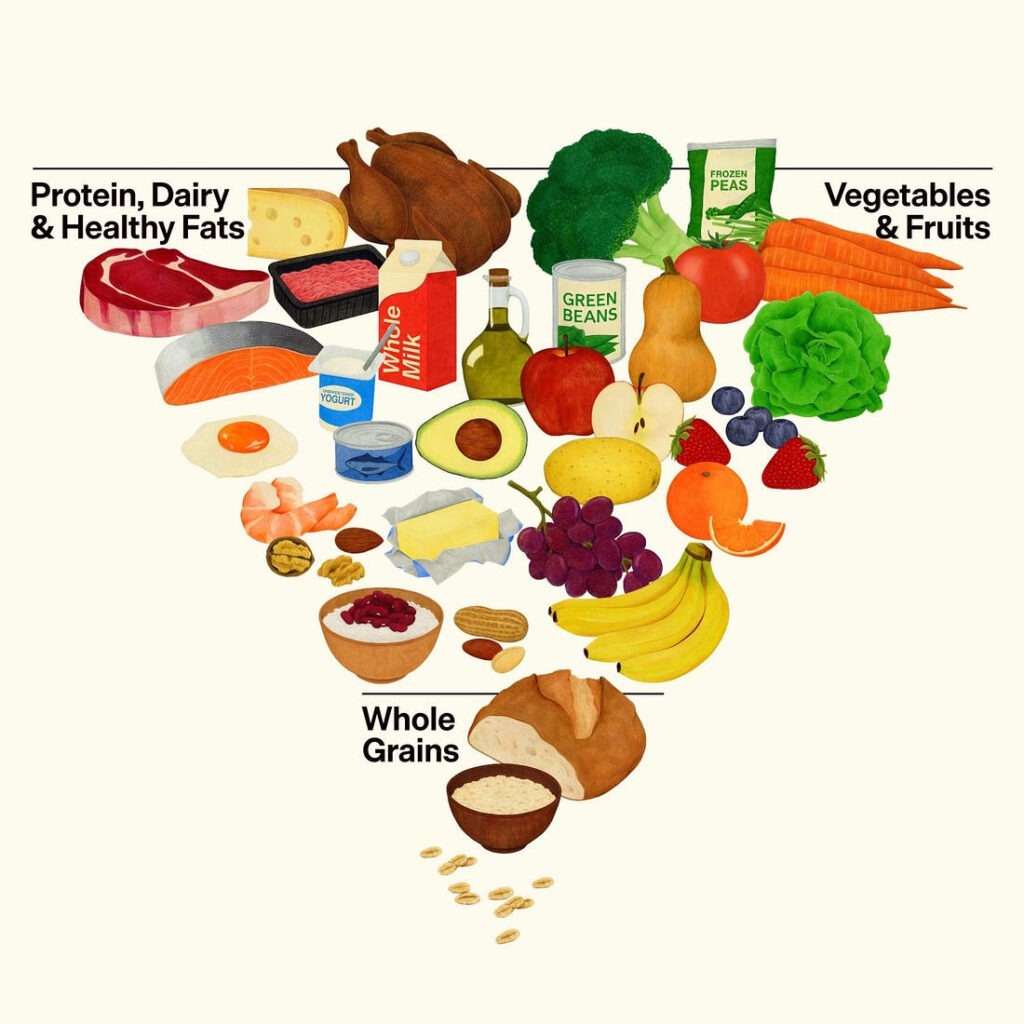
My answer usually begins here: nutrition is complicated. It is personal, cultural, biological, and deeply influenced by access and education. One size does not fit all. That said, there are parts of the newer dietary guidelines that I appreciate, and others that raise important concerns.
The Value of Real Food
What I like most about the current approach is its emphasis on real food. Moving away from highly processed and adulterated products simply makes sense. Whole foods tend to be more nutrient-dense, easier for the body to recognize, and less likely to contribute to chronic inflammation.
I also see value in the recommendation to reduce grains. Most grains in today’s food supply are sprayed with agricultural chemicals that can disrupt human health. Beyond chemical exposure, grains can promote chronic inflammation and cause spikes in blood sugar, especially when consumed in excess or in highly refined forms. For many people, this combination creates long-term stress on the body rather than nourishment.
Concerns About Animal Products and Food Sources
Where the guidelines fall short, in my view, is in their lack of clarity about animal products.
I am not anti–meat or dairy. However, I am deeply concerned about the source of these foods. Much of the meat and dairy available today comes from concentrated animal feeding operations, commonly known as CAFOs. These environments are often overcrowded and stressful for animals, which increases disease risk. As a result, antibiotics are routinely used, contributing to the growing and serious problem of antibiotic resistance.
In addition, many animals are fed corn that has been treated with glyphosate-based herbicides. Glyphosate has been linked in research to serious health concerns, including cancer. What the animals consume ultimately becomes part of what we consume.
Access, Awareness, and the Reality of the Food System
Not everyone is aware of these issues, and not everyone has access to locally sourced or non-industrial food. That reality matters.
I recently read about a trial begun by the FDA in December 2025 to research restorative or regenerative agriculture. This is a promising direction and one that may eventually address many of the problems within our current food system. However, meaningful change at the supply level will take time, and these improvements are unlikely to reach the mainstream food supply in the near future.
A Practical Bottom Line
For me, the takeaway is straightforward and practical:
- Eat real food whenever possible.
- Reduce pro-inflammatory foods, especially grains, sugar, and alcohol.
- Aim to get carbohydrates primarily from fruits and vegetables.
- Choose protein from clean, responsibly sourced options, ideally local when available.
- Include quality fats. In my own kitchen, I use organic expeller-pressed olive oil, butter, and coconut oil.
Nutrition does not need to be perfect to be powerful. Small, informed choices made consistently can support healing, reduce inflammation, and improve long-term well-being. My goal is not to prescribe a rigid diet, but to help people think more clearly about what they are eating, where it comes from, and how it affects their health.